There was a time when Hollywood stars did not need elaborate introductions.
Some performers could walk into a scene, say only a few words, and immediately make the entire story feel more believable. With his towering frame, weathered features, and unmistakably deep voice, this actor possessed that rare kind of presence.
To audiences who grew up watching Saturday matinees, late-night television, and neighborhood movie-house double features, he was one of those familiar faces who seemed to belong in every kind of picture.
He could be intimidating, dependable, dangerous, unexpectedly tender—and, as moviegoers later discovered, wonderfully funny.
The unforgettable performer was George Kennedy, an Oscar-winning actor whose career connected the rugged dramas of old Hollywood with the broad comedies of a new generation.
A Childhood Surrounded by Show Business
George Harris Kennedy Jr. was born in New York City on February 18, 1925. Entertainment was already part of his family’s world. His father was a musician and orchestra leader, while his mother had worked as a ballet dancer.
Kennedy encountered the stage at a remarkably young age, but his route to Hollywood would not be quick or conventional. Long before movie audiences knew his name, he spent much of his early adult life wearing a military uniform rather than standing beneath studio lights.
That experience would eventually give him something that could not easily be taught in an acting class: discipline, confidence, and a quiet understanding of authority.
Video : George Kennedy winning Best Supporting Actor
Sixteen Years in the United States Army
During World War II, Kennedy enlisted in the U.S. Army. He served in Europe and fought in the Battle of the Bulge before reenlisting after the war. His military career lasted approximately 16 years and later included work with the Armed Forces Radio Network.
One of his final Army assignments brought him unexpectedly close to television. Kennedy served as a military adviser on The Phil Silvers Show, the popular 1950s comedy centered on the endlessly scheming Sergeant Bilko.
He occasionally appeared in small roles on the program, gaining practical experience in front of the camera. When health problems eventually ended his military career, acting offered him a new direction.
Hollywood soon discovered that Kennedy’s imposing six-foot-four-inch build made him ideal for Westerns, crime dramas, and adventure films. At first, he was frequently cast as the threatening man entering through the door—the guard, gunman, soldier, or villain whose presence immediately raised the stakes.
But beneath that rugged exterior was an actor capable of far greater emotional depth.
The Role That Changed Everything
That depth became impossible to overlook in the 1967 classic Cool Hand Luke.
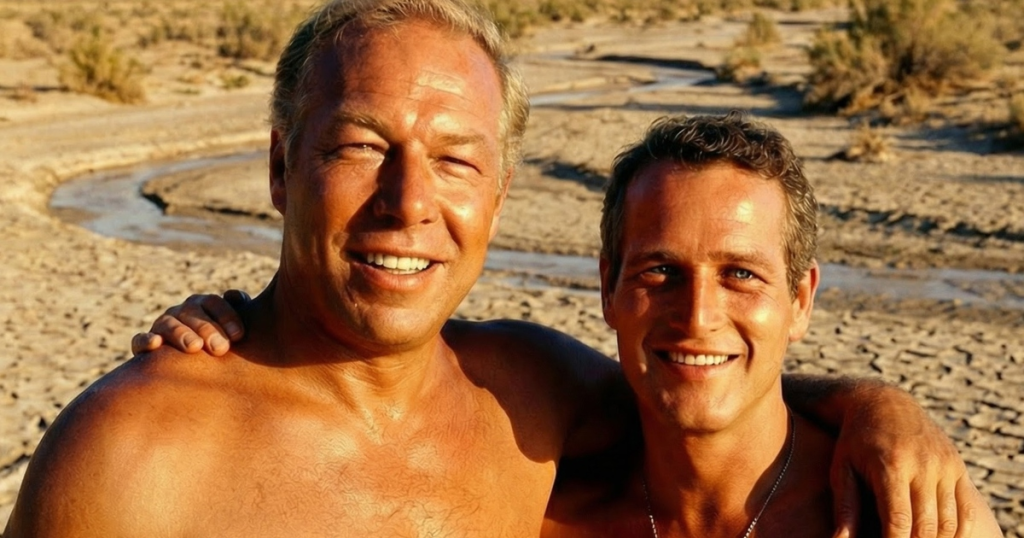
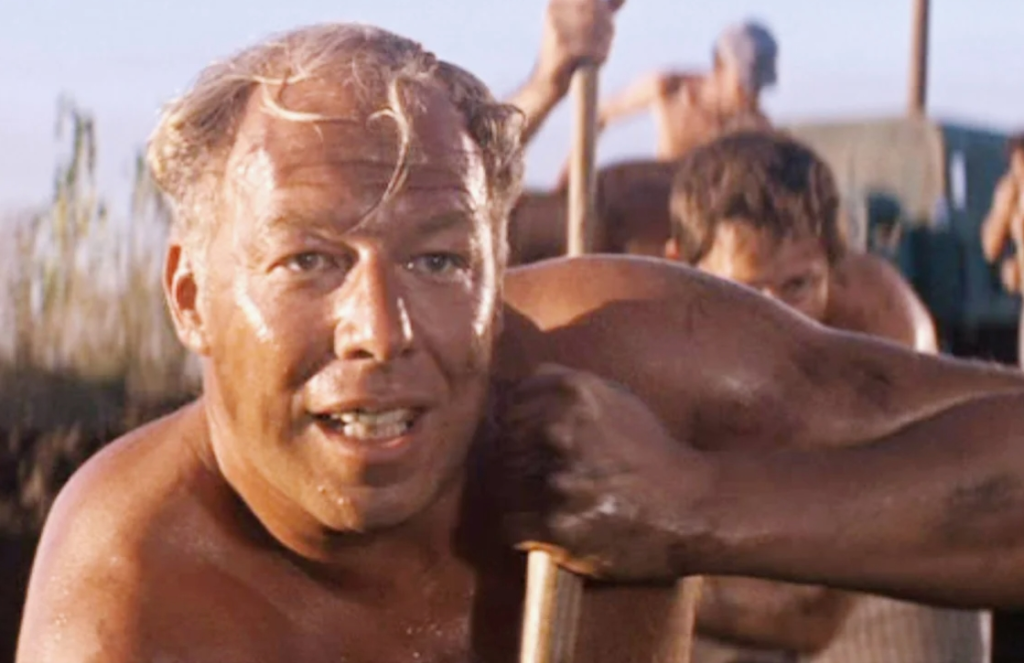
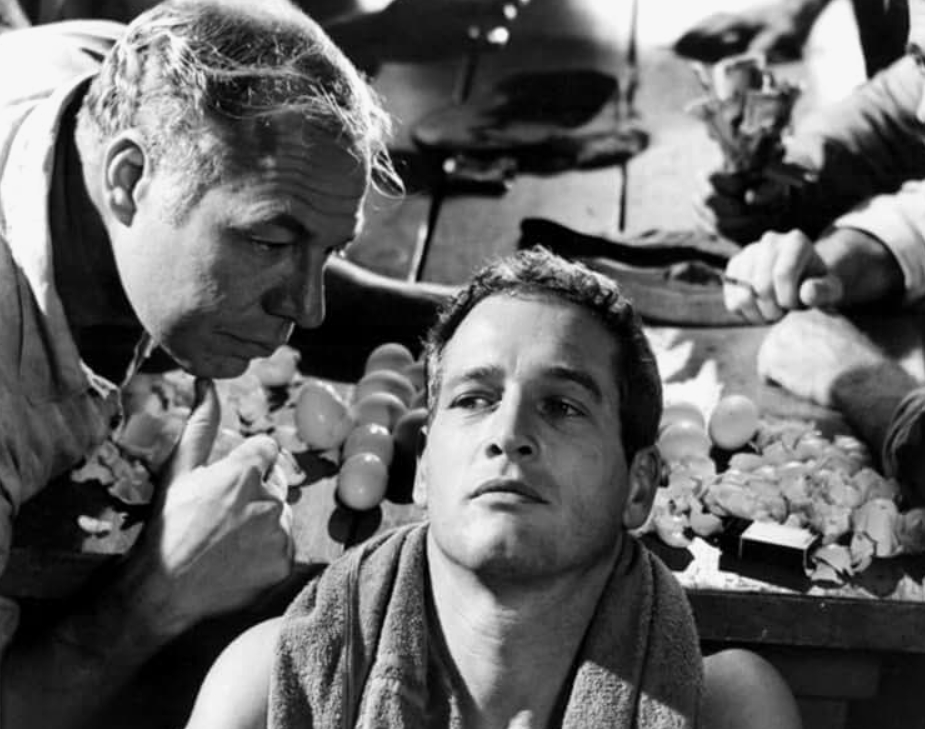
Paul Newman played Luke Jackson, the rebellious prisoner whose refusal to surrender made him a symbol of independence. Kennedy portrayed Dragline, the physically powerful leader of the prison camp who initially resented Luke’s defiance.
Their relationship gave the movie much of its emotional force.
Dragline begins as an intimidating rival, but his feelings gradually change. Competition becomes admiration, and admiration becomes loyalty. Kennedy allowed viewers to see that transformation without ever making the character seem weak or sentimental.
His performance was tough, funny, wounded, and deeply human.
At the 1968 Academy Awards, Kennedy received the Oscar for Best Supporting Actor. Cool Hand Luke earned four nominations, with Kennedy taking home the film’s only competitive win.
For an actor who had spent years playing anonymous heavies and background tough guys, the award represented a remarkable turning point. He was no longer simply the large, intimidating man in the scene. He had become one of Hollywood’s most respected character actors.
Video : Rewind: George Kennedy on “Naked Gun” movies, John Wayne, Dirty Dozen, the Airport films, etc -1994
A Face Audiences Learned to Trust
Following his Oscar victory, Kennedy became a familiar presence in many of the era’s most memorable productions.
He appeared in war films, Westerns, mysteries, action pictures, and large-scale disaster movies. His credits included The Dirty Dozen, The Flight of the Phoenix, The Sons of Katie Elder, Earthquake, The Eiger Sanction, and Death on the Nile.
Even when surrounded by major stars, Kennedy never disappeared into the background. He had a reassuring screen quality that made audiences believe his character understood the situation—even when everyone else seemed to be losing control.
That quality made him especially valuable in the Airport films.
As aviation expert Joe Patroni, Kennedy became the only actor to appear in all four movies in the original Airport series. The character’s job changed over the course of the films, but his essential qualities remained the same: practical knowledge, steady nerves, and an ability to keep working while disaster unfolded around him.
For moviegoers of the 1970s, Joe Patroni felt like the man everyone hoped would arrive when something had gone terribly wrong.
The Tough Guy Who Could Make America Laugh
By the late 1980s, Kennedy had already established a career most actors would have considered complete. Then he introduced himself to an entirely different generation.
In The Naked Gun: From the Files of Police Squad!, Kennedy played Captain Ed Hocken alongside Leslie Nielsen’s spectacularly inept detective, Frank Drebin.
The comedy worked because its actors treated the most ridiculous situations with complete seriousness. Kennedy’s years of playing military officers, lawmen, mechanics, and authority figures made him perfectly suited to that style.
He rarely appeared to be trying to get a laugh. Instead, he delivered absurd dialogue with the same gravity he might once have brought to a prison drama or airborne emergency.
Kennedy returned for two sequels, helping make Captain Hocken one of his most warmly remembered roles. The trilogy revealed something longtime admirers may already have suspected: behind the imposing appearance was a performer with excellent comic timing.
Why George Kennedy Still Feels Familiar
George Kennedy continued working well beyond the period when many stars choose retirement. His career lasted more than five decades and included film, television, drama, comedy, and nearly every genre between them.
He died on February 28, 2016, at the age of 91, leaving behind a body of work that remains closely tied to several generations of American moviegoing.
His enduring appeal did not come from carefully maintained glamour or constant leading-man roles. It came from reliability.
Kennedy made supporting characters matter. He understood that a movie’s emotional center does not always belong to the person whose name appears first on the poster. Sometimes it belongs to the loyal friend, the hardened prisoner, the mechanic with a plan, or the straight-faced police captain trying to make sense of chaos.
A Lasting Place in Hollywood Memory
Watching George Kennedy today can feel like opening an old family photo album or hearing the opening music of a favorite television program.
His performances recall an era when character actors became trusted companions to audiences. They returned year after year, sometimes as heroes and sometimes as villains, bringing with them a reassuring sense of familiarity.
Kennedy could stand beside Paul Newman in a serious American classic, guide an airplane through a cinematic catastrophe, and exchange perfectly ridiculous dialogue with Leslie Nielsen—all while remaining unmistakably himself.
That versatility is why his work continues to be remembered.
He was more than Hollywood’s dependable tough guy. He was a gifted actor who found humanity inside strength, humor inside seriousness, and dignity inside nearly every role he played.