There was a time when television did not need dazzling special effects, complicated storylines, or endless cliffhangers to bring a family together.
Sometimes all it took was a banjo, a country song, a cornfield, and a joke you could see coming from a mile away.
For millions of Americans, that wonderfully simple combination became part of a familiar weekly ritual. The show was Hee Haw, the country-music variety series that turned rural humor, unforgettable characters, and some of Nashville’s finest musicians into one of television’s most enduring traditions.
For viewers who grew up with it, remembering Hee Haw is about much more than remembering an old television program. It can bring back the sound of a family settling into the living room, the glow of a television set in the corner, and an evening when entertainment felt less hurried than it often does today.
When Saturday-Night Television Felt Like a Family Visit
Modern viewers have more entertainment choices than previous generations could ever have imagined.
But there was something special about the days when families built their evenings around a handful of favorite programs.
You knew when the show was coming on. You recognized the music before anyone announced the title. You knew the familiar faces, the recurring jokes, and sometimes even the punch lines.
That familiarity was not a weakness. It was the point.
Hee Haw mixed short comedy sketches with country, bluegrass, and gospel performances, creating an easygoing rhythm that invited viewers to settle in rather than keep up with an elaborate plot. The original program began on CBS in 1969, with country stars Roy Clark and Buck Owens serving as its best-known early hosts.
A Cornfield That Became Part of Television History
Few television sets were simpler than the famous Hee Haw cornfield.
Cast members would suddenly appear between the stalks, offer a quick one-liner, react to another performer, and disappear almost as quickly as they arrived.
There was no need for an elaborate setup.
The humor was deliberately corny, cheerful, and predictable. That was exactly why so many viewers loved it.
Recurring features such as the “Kornfield Jokes,” “Pfft! You Was Gone,” and “Gloom, Despair, and Agony on Me” developed their own rhythms. Longtime fans often knew what was coming before the performers finished setting up the joke.
Yet people kept watching.
Sometimes knowing what comes next is part of the comfort.
Roy Clark and Buck Owens Brought Real Musical Talent
Behind all the overalls, exaggerated country characters, and playful comedy was some serious musicianship.
Roy Clark was far more than a television personality. He was an accomplished multi-instrumentalist whose skill helped make him one of the respected figures in country entertainment. When CBS launched Hee Haw in 1969, Clark and Buck Owens were selected as co-hosts.
Owens brought an equally important musical identity to the program.
Long associated with the distinctive Bakersfield sound, he had already established himself as one of country music’s major stars before Hee Haw became a television institution.
Together, Clark and Owens gave the show an unusual balance.
The jokes could be wonderfully silly.
The music never had to be.
When Seeing a Country Singer on Television Was an Event
It can be difficult today to remember just how different music discovery once was.
There was no YouTube waiting in your pocket. No streaming service could instantly produce thousands of performances. There were no social-media clips appearing every few minutes.
For many Americans, radio was where they first heard a favorite country singer.
Television was where they finally got to see that singer.
That gave programs like Hee Haw a special importance.
Musical performances were not simply filler between comedy sketches. They were one of the reasons families tuned in. For viewers living far from Nashville or the major country-music touring circuit, television could bring performers into their homes in a way that felt surprisingly personal.
The show became a meeting place between country music and mainstream American television.
The Faces Became Almost Like Old Friends
Variety television depended on something that cannot easily be manufactured: familiarity.
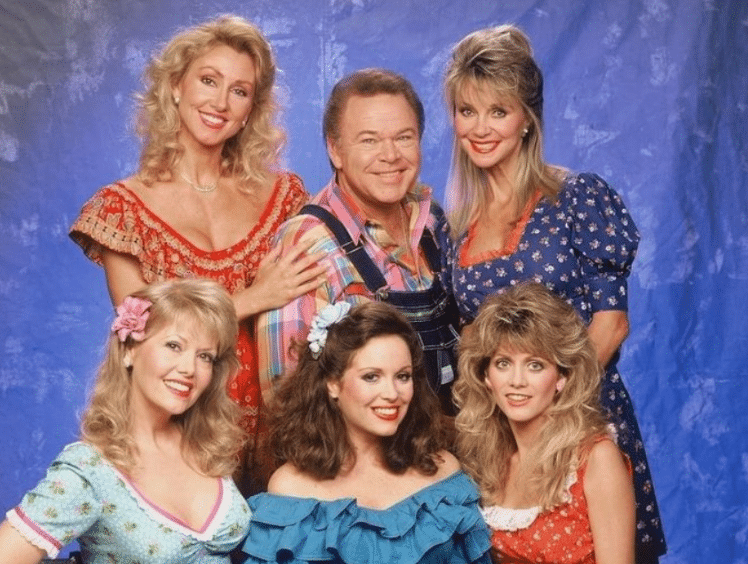
Over time, Hee Haw built an ensemble of performers whose faces became instantly recognizable to regular viewers.
You did not need an introduction every week.
You already knew who they were.
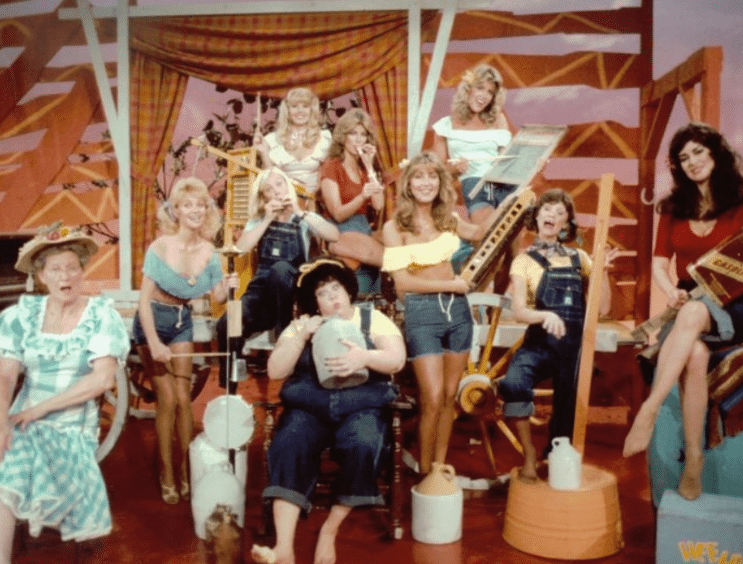
That recurring cast gave the show the feeling of a community. The performers appeared in familiar costumes, familiar settings, and familiar routines, yet their timing and chemistry kept those scenes alive.
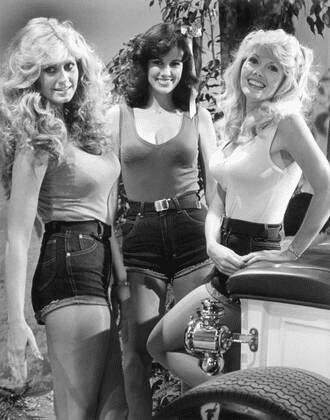
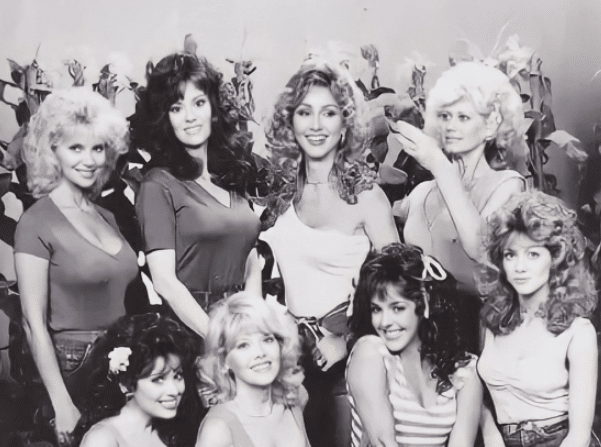
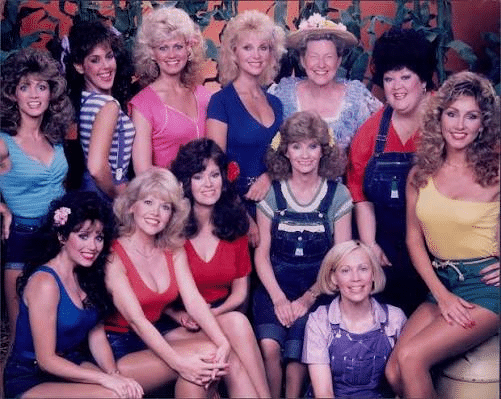
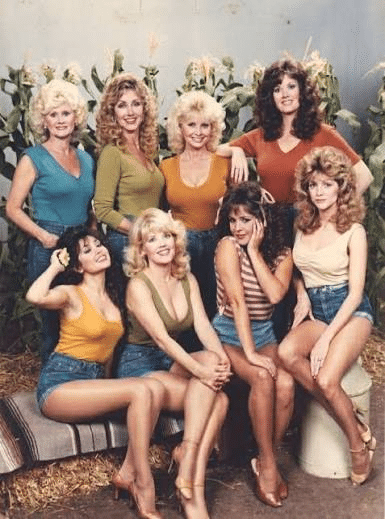
The program also became remembered for its female ensemble performers, often associated with the “Hee Haw Honeys,” whose colorful costumes and comedy appearances became another recognizable part of the show’s visual identity.
Looking back at photographs from those years can immediately evoke the particular style of 1970s and 1980s television — big hair, bright clothes, denim, gingham, and studio sets created long before high-definition screens made every detail look perfect.
And Perfect Was Never Really the Point
That may be one of the biggest differences between classic television and much of today’s entertainment.
Older programs sometimes felt less polished.
A performer might start laughing.
A joke could land imperfectly.
Someone’s reaction might become funnier than the scripted line.
Instead of ruining the moment, those little imperfections often made viewers feel closer to the people onscreen.
Hee Haw benefited from that looseness. Its appeal came partly from the sense that talented entertainers were enjoying themselves while inviting everyone watching at home to join them.
It Celebrated a Side of America Television Often Overlooked
The barns, overalls, cornfields, country accents, and farm jokes were exaggerated for comedy.
But beneath the exaggeration was something sincere.
Hee Haw was comfortable with rural America.
It did not treat country music as something that needed to be transformed into big-city entertainment before it could belong on national television. Small-town imagery, farming references, gospel music, country humor, and Southern traditions were allowed to occupy center stage.
For many viewers who came from farming communities or small towns, that recognition mattered.
They could turn on the television and see a playful version of a world that still felt familiar.
The Songs and Catchphrases Stayed in People’s Memories
Some television moments are remembered because they were dramatic.
Others survive simply because audiences heard them often enough that they became part of everyday memory.
Hee Haw had plenty of the latter.
“Gloom, Despair, and Agony on Me” became one of the program’s signature musical-comedy routines, while “Pfft! You Was Gone” turned a recurring joke into something close to a singalong tradition.
The repetition made the show comforting.
Viewers were not always looking to be surprised. Sometimes they wanted to hear an old joke, see an old face, and enjoy a song that reminded them of home.
A Cancellation That Couldn’t End the Show
Hee Haw also proved something remarkable about the loyalty of its audience.
CBS dropped the series in 1971 during the period commonly remembered as the network’s “rural purge,” when several programs associated with rural themes disappeared from its schedule.
But Hee Haw did not disappear.
Instead, it found new life in first-run syndication and continued for decades. Its long post-network run demonstrated that a national network could cancel a program without ending the relationship between that program and its viewers.
The audience was still there.
Local stations were still interested.
And week after week, the cornfield remained open for business.
Why Hee Haw Still Feels Special All These Years Later
Television has changed enormously since those evenings.
The picture is sharper now. The choices are almost endless. Entertainment can follow us from room to room on devices small enough to hold in one hand.
But technology cannot completely replace the feeling of a shared ritual.
That may be why Hee Haw still inspires such warm memories.
It belonged to an era when viewers returned to the same familiar television worlds every week. A favorite show could become associated with a particular chair, a particular room, a particular family member, or a particular season of life.
And perhaps that is the real reason the corny jokes still matter.
They remind us of more than television.
They remind us of where we were when we watched it.
For those who remember Roy Clark picking a guitar, Buck Owens smiling toward the camera, the familiar cornfield, and an entire cast prepared to deliver one more unapologetically silly joke, Hee Haw remains more than an old variety show.
It remains a little piece of home.