
For anyone who remembers the golden age of glossy fashion magazines, there was a time when a single photograph in Vogue could turn a model into an international name. Long before Instagram, reality television, and the endless cycle of celebrity updates, fashion icons were introduced to the world through carefully composed magazine pages.
One woman who became impossible to overlook during that era was Janice Dickinson.
Recently resurfaced photographs show Dickinson enjoying the ocean in Malibu, wearing a black bikini top with turquoise-blue bottoms and her hair pulled into a casual bun. At first glance, the pictures can look like a new celebrity sighting. In reality, they capture a much earlier moment in her life.
The photographs were taken in September 2016, when Dickinson was 61, rather than during a recent 2026 beach outing. Contemporary coverage described her walking through the Malibu surf only months after publicly discussing her breast cancer diagnosis and treatment.
A Familiar Face From Fashion’s Golden Years
For longtime fashion fans, Dickinson’s story brings back memories of an entirely different celebrity landscape.
In the 1970s, fashion magazines were cultural events. Readers waited for each new issue, studied the photography, remembered the clothes, and often recognized models by face alone. There were no daily social-media updates and no constant behind-the-scenes access. Models could feel both familiar and wonderfully distant.
Dickinson was one of the distinctive faces of that period.
Born in Brooklyn and raised in Florida, she eventually made her way into the competitive modeling world. Her appearance stood apart from many conventional beauty standards of the period, and that individuality became part of what made her memorable.
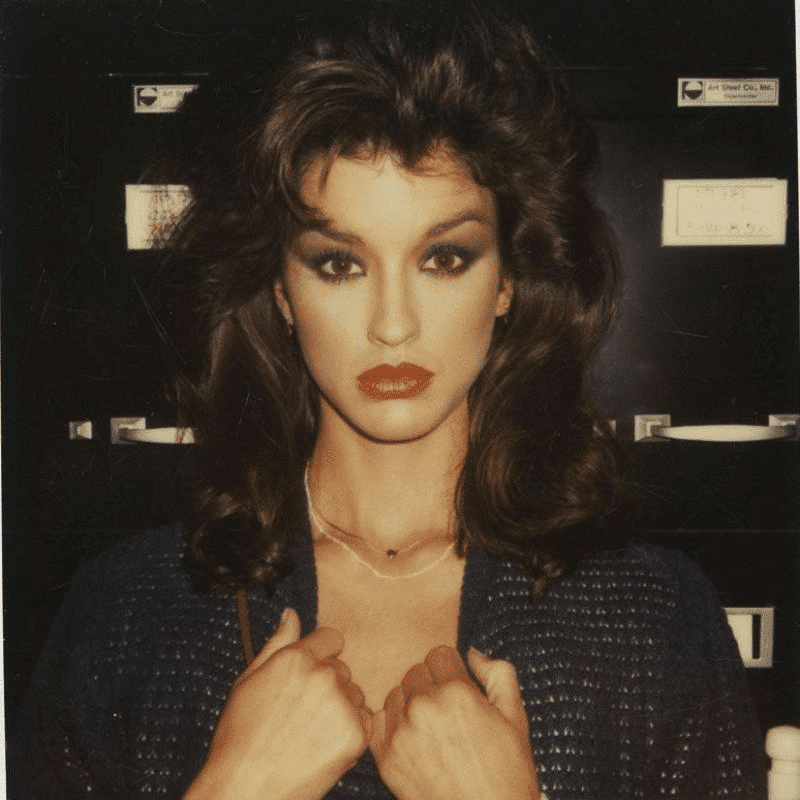
Vogue later looked back at Dickinson as a model who helped define the fashion mood of the 1970s. Its archives include photographs of her by celebrated photographers such as Irving Penn, Arthur Elgort, Richard Avedon, and Bob Richardson.
Those names themselves will bring back memories for readers who followed fashion during those years. Their photographs helped create an era when magazine imagery felt cinematic, sophisticated, and almost larger than life.

When Magazine Covers Created Stars
It can be difficult to remember just how influential print magazines once were.
Before a celebrity could reach millions of people instantly through a phone screen, photographs traveled slowly. A modeling career was built through editorial pages, advertising campaigns, runway appearances, and word of mouth within the fashion industry.
A memorable photograph could remain on a coffee table for weeks.
Readers might tear pages from magazines, save favorite advertisements, or recognize a model years later simply because they remembered one unforgettable photograph.
Dickinson emerged during exactly that period.
She later famously described herself as the “world’s first supermodel.” The historical origins of the term are debated, so the claim is best understood as part of her colorful public persona rather than a universally accepted title.
What is much easier to establish is her importance to the fashion imagery of the 1970s. Vogue has described her as a regular presence in the magazine whose distinctive look helped define that decade.
A Beach Photograph With More History Than It First Appears
The Malibu images take on a different meaning once their true date is understood.
Dickinson publicly disclosed in March 2016 that she had been diagnosed with a non-invasive form of breast cancer after a routine medical appointment led to additional testing. She subsequently underwent treatment, including radiation therapy.
By July of that year, she had completed her prescribed course of radiation, according to contemporary reporting. The Malibu photographs followed in early September.
That context matters.
Rather than presenting the photographs as a dramatic new transformation or inviting comparisons about how someone has aged, they can be viewed as a simple snapshot from a significant year in Dickinson’s life.
She is seen walking through the waves, smiling on the shoreline and spending time beside the Pacific.
Nothing about the pictures requires sensational interpretation. Sometimes an old photograph is most interesting because of the story surrounding the moment in which it was taken.

Television Introduced Her to an Entirely New Generation
Readers who did not follow fashion magazines during the 1970s may remember Dickinson for a very different reason.
Decades after establishing herself as a model, she became part of the reality-television boom of the early 2000s.
She joined America’s Next Top Model during its early years and appeared on the judging panel for its first four cycles. Her direct personality and decades of industry experience made her one of the show’s most recognizable early figures. Netflix’s retrospective coverage of the series continues to note the impact of her time on the judging panel.
Later, cameras followed her professional world on The Janice Dickinson Modeling Agency.
For viewers who had first encountered Dickinson in carefully styled fashion photography, reality television represented a dramatic shift. Suddenly, audiences could hear her opinions, watch her interact with aspiring models, and see a personality that glossy editorial photographs could never fully capture.
It was also symbolic of a much larger transformation in celebrity culture.
The stars of the 1970s and 1980s were often carefully presented through magazines, television appearances, and professionally controlled publicity. By the 2000s, reality television promised something different: personality, unpredictability, and the impression of life behind the polished photograph.
Dickinson managed to become recognizable in both worlds.
A Personal Milestone Followed Later That Year
The year captured in the Malibu photographs included another important milestone.
On December 10, 2016, Dickinson married psychiatrist Robert “Rocky” Gerner in an intimate Beverly Hills ceremony. Entertainment Tonight reported that the wedding took place at a friend’s home after the couple had been engaged for several years.
Seen together, the events place the beach photographs within a memorable chapter of her biography: a difficult medical diagnosis earlier in the year, treatment during the months that followed, a quiet September day beside the ocean, and marriage before the year ended.
It is an example of why old celebrity photographs can sometimes become more meaningful with time.
The image itself may look simple. The history around it tells a much larger story.

Why Her Name Is Still Part of the Conversation
Dickinson’s connection to popular culture did not end with the first wave of reality television.
In February 2026, Netflix released the three-part documentary series Reality Check: Inside America’s Next Top Model, revisiting the enormously influential competition show and examining its complicated cultural legacy.
Dickinson does not appear in new interviews in the documentary. Director Daniel Sivan told Netflix’s Tudum that the filmmakers had wanted to interview her, but she was unavailable because she was working on another documentary project at the time.
That renewed interest says something about the unusual length of Dickinson’s public career.
She experienced an age when fashion fame came from print magazines. She later entered television just as reality programming was changing American entertainment. Now her work is being revisited during the streaming era.
Few careers offer such a clear window into how celebrity itself has changed.
A Photograph That Brings Back Another Era
For older readers, perhaps the most interesting part of these resurfaced photographs is not the swimsuit, the beach, or even the celebrity curiosity surrounding them.
It is the sense of time they carry.
They connect several very different periods: the glamorous editorial world of the 1970s, the reality-TV explosion of the early 2000s, a deeply personal chapter in 2016, and today’s online culture, where older photographs can suddenly return to millions of screens.
That journey also reminds us how easily the context behind an image can disappear.
A photograph taken ten years ago can circulate again with little indication of when it was captured. Without the original date, viewers may naturally assume they are seeing something recent.
In Dickinson’s case, the Malibu photographs belong specifically to September 2016, when she was 61. Dickinson, born February 15, 1955, is 71 in 2026.
Knowing that timeline does not make the photographs less interesting. If anything, it gives them greater meaning.
Conclusion: More Than a Resurfaced Beach Photo
Janice Dickinson’s Malibu photographs represent only a brief moment in a career that has crossed several generations of American popular culture.
Longtime readers may remember her from the pages of Vogue, when fashion photography carried an almost magical sense of glamour. A younger generation may associate her with the early days of America’s Next Top Model. Others may simply recognize a familiar face without immediately remembering where they first saw her.
The real story behind these photographs is ultimately not about comparing appearances or judging how someone has changed with age.
It is about time, memory, resilience, and an unusually long career in the public eye.
More than ten years after that quiet Malibu afternoon, the photographs offer something older readers understand especially well: sometimes an image becomes more interesting not because it is new, but because we finally know the history behind it.